Oops! The content you were trying to access either has a new address or is no longer available. Check our site map for a complete listing of our content or do a site search.
We are always in Urgent Need of the following items that we use for the daily care of the animals:
Dry Kitten and Puppy Food (no dyes please, plain brown kibbles)
Canned Kitten and Puppy Food
Newspaper - no inserts or shiny pages, please.
Kong Dog Toys are needed to keep the dogs active and entertained while they await their new forever homes.
More kitties are coming into CAP looking for homes and until they find their new families, these furr-bulous felines need a fun and safe place to sleep and play. Help us house our new friends by donating a Cat Cage Playpen
Everyday Wish List
Puppy and Kitten Milk Replacer (for our Foster Home babies)
Paper towels (White--no patterns, please)
Newspaper--folded or completely unfolded and stacked is always needed to line the crates and cages.
Bathroom Tissue
Garbage bags (45 gal/heavy duty)
Ultra Clorox Bleach (no splashless or scented, please)
Dish detergent
Cat Litter (clay, not clumping)
Rabbit, Guinea Pig, & Small Animal food & hay
Copy paper
Office Supplies
Bath Towels (new or used)
Plastic grocery bags (no holes, no receipts)
Cat Toys
Kong Dog Toys
Thank you to all of our supporters on facebook for helping out during our Wishlist Wednesday donations pleas. Your generosity gives us the opportunity to care for thousands of homeless pets every year.
Citizens for Animal Protection (CAP) has put together this list of books and DVD's about pet care, humane issues, and wildlife. Buy from Amazon through the below links and part of the sale will benefit homeless animals at CAP!
Books
The First Aid Companion for Dogs & Cats - Everyone NEEDS an 'easy to read' Pet First Aid emergency book. Easy-to-read sections cover proper emergency procedures, helps you to know when to call a vet. Rated excellent by consumers.
Pet First Aid: Cats and Dogs - Easy-to-read sections cover proper emergency procedures, putting together a pet first aid kit, the tell-tale signs of particular injuries and illnesses, and more. Written and reviewed by veterinarians. Every pet owner should have an easy to read First Aid book.
Complete Guide to Dog Care - The staff of The HSUS, together with dog care and training expert Marion Lane, has compiled a useful book for every dog owner -- and prospective dog owner. From choosing the right dog and fulfilling your dog's basic needs, to finding a veterinarian and training your dog, this comprehensive book stresses the idea of companionship between you and your dog.
First Aid for Dogs (What to do When Emergencies Happen) - A great book focusing exclusively on emergency care for dogs - a must-have.
Second Chances - tells the stories of animal adoptions. This book has a wonderful collection of heartwarming adoption stories. Written by J. Banks, the book has fifty tail-wagging tales. Touching and entertaining, every animal-lover and CAP human companion will enjoy this great collection.
Good Owners, Great Dogs - Informative book on caring for and training your dog. Brian Kilcommons was taught by Barbara Woodhouse one of the greatest dog trainers of all times. He shows you how to teach your dog obedience in a very firm, yet sensible and humane (no hitting) way.
Animal House Style: Designing a Home to Share With Your Pets - Animal House Style is packed with design tips on everything from the best fabrics for a pet-loving home to furnishings made for human and animal comfort without sacrificing great taste.
Complete Guide to Lost Pet Prevention and Recovery - "An invaluable resource. The information in this book could, quite possibly, save your pets life. The research is painstakingly accurate and thorough the authors commitment to the welfare of animals is evident on every page." - E.Schmidt, Monmouth Co. SPCA. This book is a must-read for everyone who is concerned about the ultimate safety of pet animals.
All for Animals - Tips and Inspiration for Living a More Compassionate Life.- Mark Beckloff, Founder of Three Dog Bakery writes: "Moving and unforgettable, 'All for Animals' acts as a catalyst which challenges all who read it to embrace an attitude of proactive kindness."
Not Left Behind: Rescuing the Pets of New Orleans - Proceeds from sale of this book to be used to help animals. There is also a video tribute to the animals called "Remembering the Animals of Hurricane Katrina."
Wild Neighbors: The Humane Approach to Living with Wildlife - Produced by HSUS staff, Wild Neighbors is packed with detailed "how-to" solutions for dealing with everything from bats in your attic to deer in your garden, without causing harm to any animal.
Through Animal's Eyes: True Stories from a Wildlife Sanctuary - Wildlife Rescue & Rehabilitation (WRR), a wildlife sanctuary in Texas that takes care of more than 5,000 animals a year. Some have been orphaned or seriously injured; others have been rescued from roadside zoos or released from research labs. Whatever their story, these animals find safe haven with author and WRR founder Lynn Cuny, who recounts 31 stories of WRR’s most memorable critters.
Animal Liberation - An important and persuasive appeal to conscience, fairness, decency and justice, Animal Liberation is essential reading for the supporter and the skeptic alike.
DVD / Video
The Witness (DVD) - "May be the most important and persuasive film about animals ever made" Howard Rosenberg, Los Angeles Times.
Thank you for your interest in volunteering at Citizens for Animal Protection! As a CAP volunteer, you're joining like-minded individuals who go above and beyond in their generosity to make a difference in the lives of homeless animals.
We offer a variety of programs to fit your needs from teen volunteering (Teen Service Day), volunteering long-term (Individual Volunteering), with a school or corporation (Group Volunteering) to volunteering from home to earn short-term hours (Service Projects). We not not accept walk-in volunteers.
Take a Sneak Peek at What Volunteering Looks Like!:
Teen Service Day
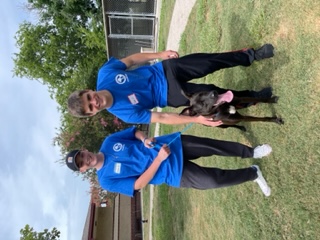
Youth ages 14-18 can make a difference in the lives of homeless dogs by walking and socializing them in our enclosed park. This is a one-time volunteer session that earn students 3 hours of service to use towards school or organization requirements. CAP hosts a Teen Service Day event every month! Teen Service Day sessions are currently on hold until further notice.
Individual Volunteering
Must be age 14+ (ages 14-15 must co-volunteer with parent/guardian, ages 16+ can volunteer individually).
Must commit to volunteer a minimum of twice a month for 6-months.
Volunteer hours cannot be used for court ordered community service-click here for information.
Step 1: Register here for our next orientation session! (Starting 2026, orientations will posted on the 1st of every other month: February, April, June, August, October, December.)
Step 2: Complete volunteer application (received after registering).
Step 3: Train alongside a mentor in your chosen area.
Step 4: Sign up for shifts and volunteer!
Click the link to get a sneak peek of what volunteering at the shelter looks like!
Group Volunteering
Corporations, schools and organizations can volunteer to walk and socialize homeless dogs during a morning or afternoon session! Click here to fill out your request form (5-16 participants per group and participants must be 16 years old or older.)
Service Projects
Students wishing to earn service hours who aren't able to meet the age requirement or time commitment can complete projects from home. Verification forms are signed during business hours only.
Interested in a career as a Veterinary Technician?
Feral cats live outdoors and are “unowned” by people. They can be found in every landscape and every continent. Feral cats, sometimes referred to as “community cats”, are not socialized and are wary and fearful of people, preferring to live outdoors. Domesticated cats become feral when human caregivers fail to spay/neuter them and abandon them to a life on the streets. This is the number one contribution to pet overpopulation here in Houston. Feral cats are considered unadoptable as pets. Yet their suffering can be painfully obvious and it is natural to want to help them.
Trap, Spay/Neuter & Return (TNR) is the humane solution to cat colony population expansion. CAP supports this solution with our Feral Cat Assistance Program (FCAP). TNR has been used successfully all over the world and is considerably more effective than the wholesale euthanasia of all feral or “wild” cats heretofore attempted by animal control agencies and shelters. In fact, TNR is an approved method of feral cat population control within the City of Houston. See Houston Code Secs. 6 and 22. Because of our belief, CAP developed and has operated FCAP for the last ten years, a program designed to help deal with the feral cat problem in Houston.
In the case of kittens, oftentimes feral kittens can be socialized if worked with at a very early age. The ideal window for socializing feral kittens is between 6 and 10 weeks of age - beyond 10 weeks, feral cats may never socialize completely or at all. As a result, we do not recommend attempting to socialize feral cats older than 10 weeks - it is dangerous and stressful for both you and the cat. The best thing you can do to help feral cats is Trap, Neuter, and Return.
CAP will only accept feral cats through the Trap, Neuter, and Return program. If you have trapped a cat and do not want to neuter and return, you can surrender the cat to your local animal control facility but first you may want to read about preventing unwanted feral behavior with our Feral Cat Deterrence Techniques.
If you believe that you have discovered feral or stray cats near your home and would like to help these cats, first determine that the cats are indeed feral and not the neighbors' outdoor pets. You can make this determination by observing their behavior and appearance over a period of time (read this FAQ on Feral Cats). If the cat is a stray, you may want to put up "found cat" notices in the neighborhood, search the missing pet databases, file a found pet report at CAP and other local shelters and facilitate the return of the cat to its family. If you have determined the cats are feral, contact This email address is being protected from spambots. You need JavaScript enabled to view it. or call 281-600-8503 for information on trapping the cats, having them spayed/neutered and returned to their territory. Monitoring the welfare of a feral cat colony is not only interesting, but rewarding...both for the cats and for you.
Before you go…
Tap the hood of your car. Every winter CAP will receive calls from panicked citizens who while driving have realized there is a cat or kitten trapped in their car. When the weather turns cold your parked car can seem like a warm refuge. Flexible kittens snuggle up to warm engine parts without realizing you have not parked your vehicle for the day or night. Car engine parts move and a belt can quickly tear into the soft belly of a cat who just wanted to warm up. Before starting your car simply tap or thump the hood of your car to startle anyone who might be hiding underneath or in the engine compartment. You never know when this simple act might save a life.
Want to learn even more? Check out the links below.
Food for thought when selecting a new family member--your lifestyle must be considered!
Adult Dogs--Are you an active person who likes walking or jogging? Dogs are like people, some are energetic and need lots of exercise, like jogging or very long walks. Others do fine with minimal exercise and some should not be made to do strenuous exercise. Virtually every dog can enjoy a trip to the dog park, which can be fun for the whole family. Take a look at our Houston Dog Parks list and see if there is a park that is right for you.
Puppies--How much time will you set aside for your new family member? This can be affected by your work or if you have very young children in the household. Puppies and young dogs, require a lot more time because they need lots of guidance, patience and training. Young dogs have a strong desire to chew and dig and must be housetrained. Puppies have smaller bladders and cannot hold in their need to urinate as long as adult dogs. Having a puppy in your home is like having a human baby since it needs lots of your time. Puppies need a responsible ADULT to love, teach and care for them. More mature dogs, over a year, tend to be calmer and you also can see what they look like and act like. Most are past the chewing stage and many are already housetrained. See our puppy care guide for information on training and other puppy issues.
Animals who continually feel lonely and have nothing to do may find something to do, like chewing! Dogs dig for many reasons including boredom or trying to get to cool ground in hot months or they may think they smell a scent and just feel the need to dig. Please remember that humans are NOT perfect, so do NOT expect an animal to be perfect either!!! See our dog care guide for more information.
NOTE regarding SIZE of Dogs: Persons often are looking for a dog that is small, less than twelve pounds. Because of their small size, many feel threatened and so tend to be a bit snappy. Unless you live in an apartment with a weight limit, the larger dogs tend to be well-rounded and are usually good-natured thus making a larger dog an excellent indoor companion. Of course young dogs, under 1 year, are energetic but will calm down given time, love and guidance. Medium and large dogs make excellent best friends and companions!